
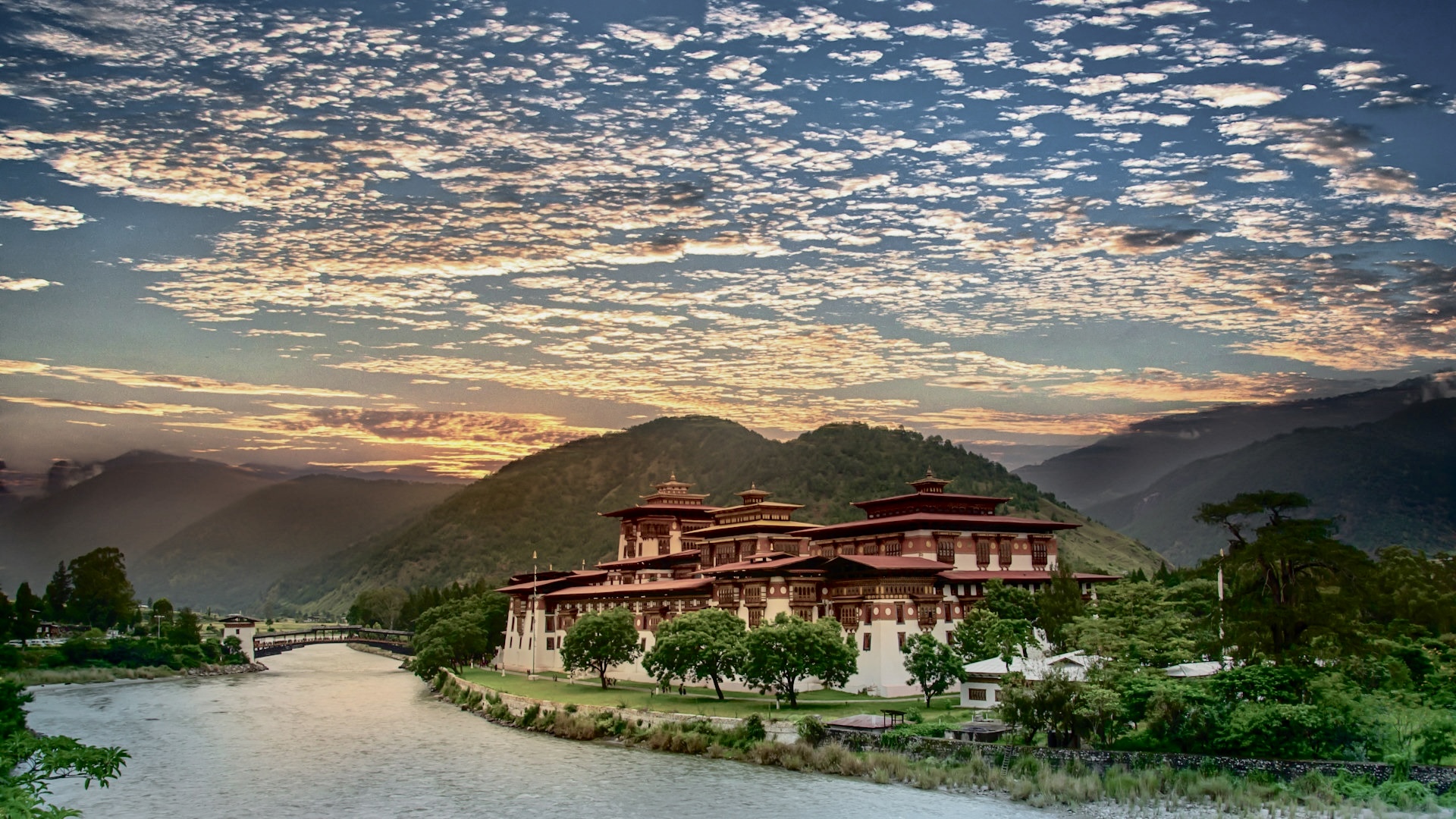
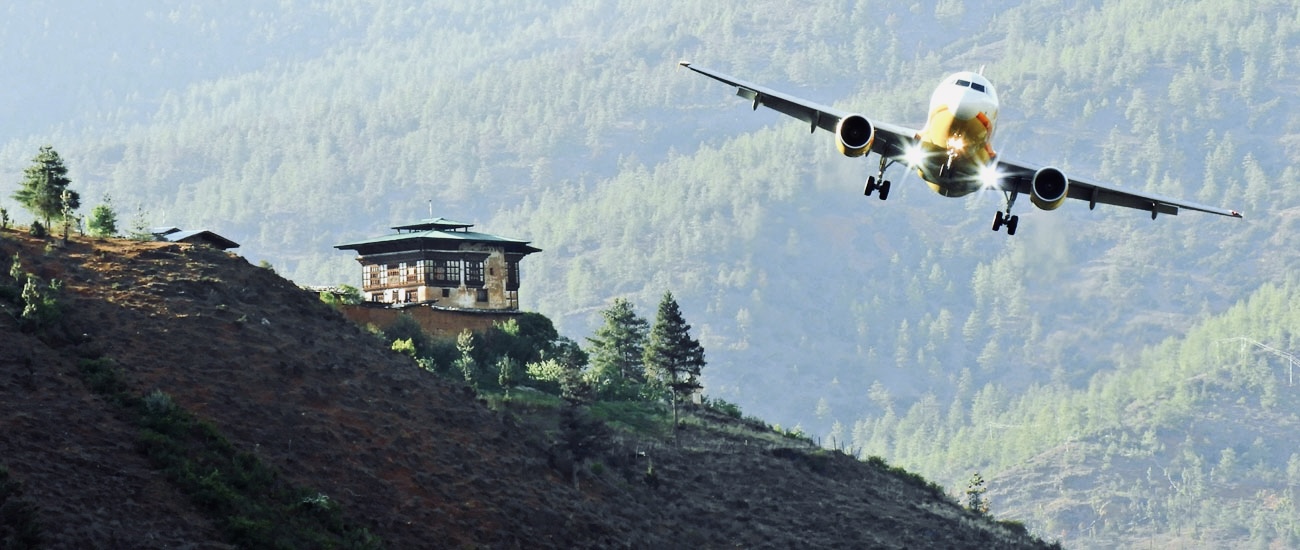
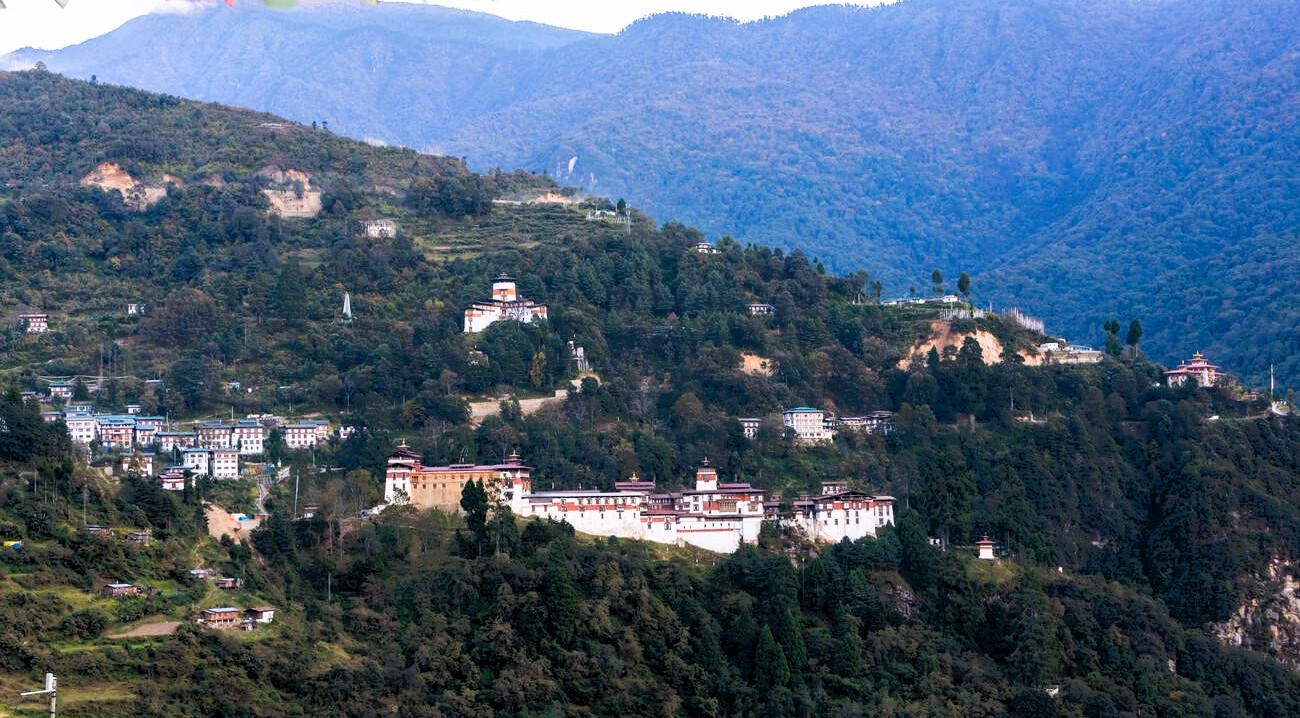
Trongsa is a small but historically significant town located in central Bhutan. It lies in a dramatic mountainous region and has played a vital role in shaping the country’s political and cultural history. The town is regarded as the ancestral home of Bhutan’s royal family.
Strategic location
Trongsa occupies a strategic position at the geographic center of Bhutan. Historically, it controlled the main trade routes between eastern and western Bhutan, making it crucial for maintaining national unity.
Trongsa Dzong
Trongsa Dzong, also known as Chökhor Rabtentse Dzong, is one of the most important and impressive fortresses in Bhutan. Perched on a ridge overlooking the Mangde Chhu river, it served as the seat of power for the Wangchuck dynasty before the establishment of the monarchy.
Culture and traditions
Trongsa has a strong cultural identity, with traditions closely tied to Bhutanese religious life. Festivals such as the Trongsa Tshechu are celebrated with masked dances and religious rituals.
Royal heritage
Trongsa holds deep significance for the Wangchuck dynasty. King Ugyen Wangchuck, Bhutan’s first hereditary monarch, served as the Penlop of Trongsa before ascending the throne.
Transportation link
Trongsa lies along Bhutan’s East–West Highway, making it an important stop for travel and trade. The road connects the eastern and western regions of the country through this central district.
Scenic beauty
The surrounding region is known for its steep valleys, dense forests, and sweeping mountain views. The landscape offers opportunities for exploration and appreciation of Bhutan’s natural environment.
Traditional crafts
Local communities in and around Trongsa practice traditional crafts such as weaving, wood carving, and textile production. These crafts reflect long-standing cultural skills passed down through generations.
Trongsa Museum
The Ta Dzong, a former watchtower above Trongsa Dzong, has been converted into a museum. It houses exhibits related to Bhutan’s monarchy, history, and cultural heritage.
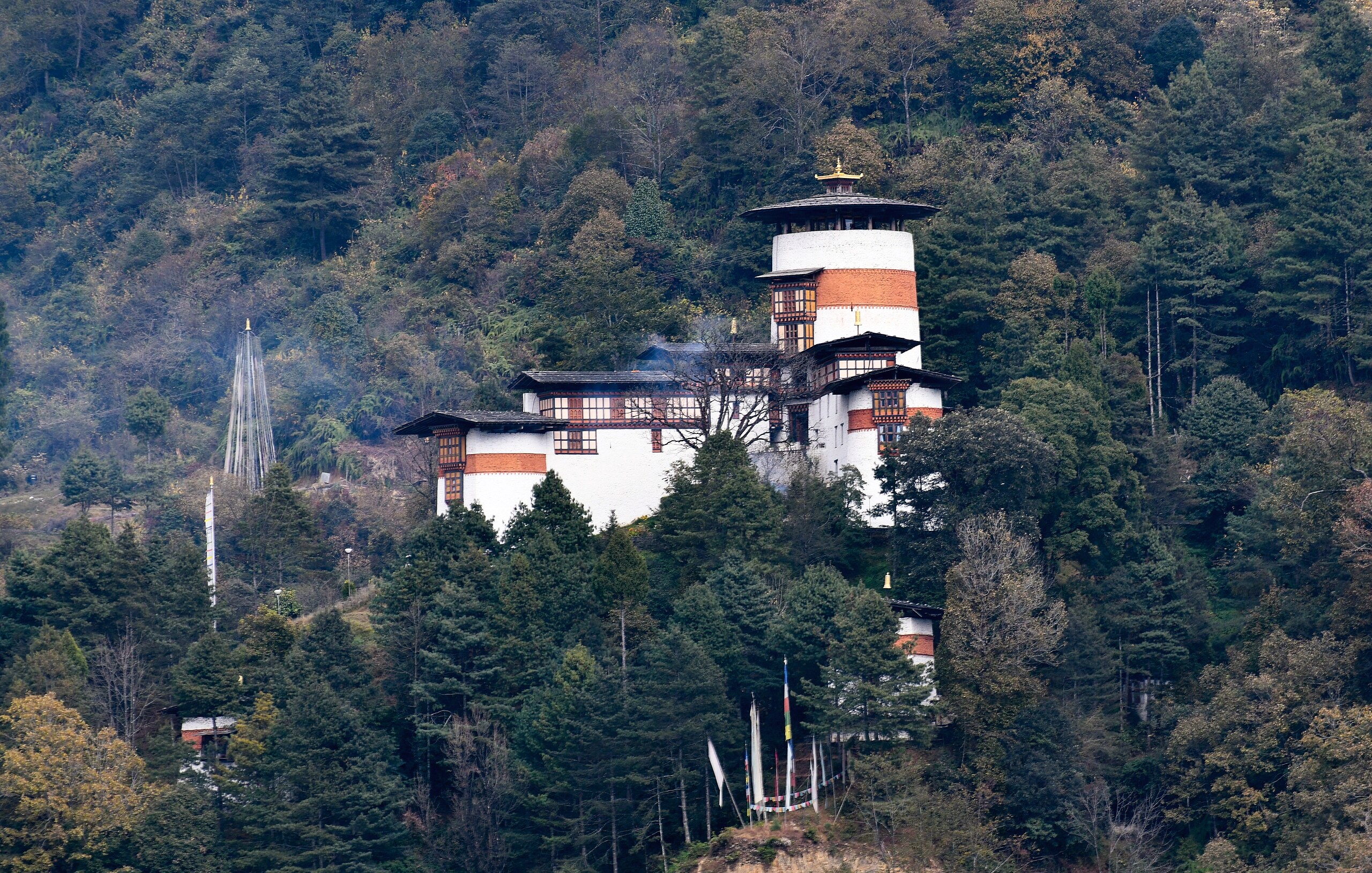
Trongsa remains a symbol of Bhutan’s unity, royal history, and strategic importance. Visitors to the town gain insight into the country’s past while enjoying its dramatic landscapes and traditional way of life.